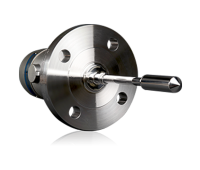
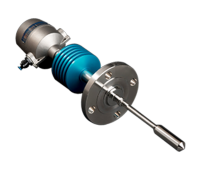
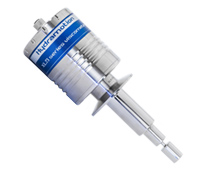
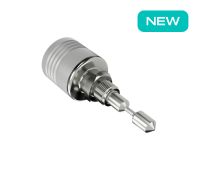
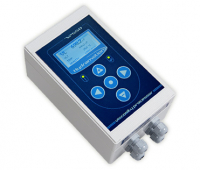
Viscosity sensors for the food industry
Viscosity control is critical to production efficiency, waste reduction, and consistent product quality in food and beverage processing. Reliable and repeatable measurement supports stable operation across core process stages, including mixing, cooking, pumping, extruding and filling.
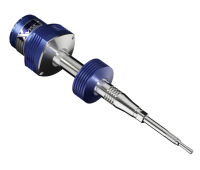
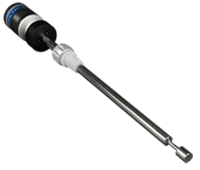
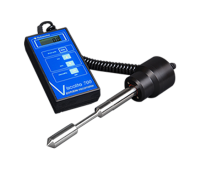
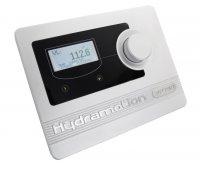
Hydramotion viscometers deliver precise, real-time viscosity measurement across a wide range of food products and applications, from thin hot liquids to cold sticky pastes.
All viscometers are clean-in-place (CIP) compatible. Hygienic viscometers are essential for sanitary and sterile settings, or any environment where contamination is a risk. As a minimum all wetted parts are manufactured from 316 (1.4401) stainless steel. Other materials, including special corrosion-resistant alloys are optional. Specialist coatings e.g. fluoropolymers, are also offered.
 Hygienic complianceCompliant with 1935/2004/EC, all wetted parts are manufactured from 316 SS and suitable for sanitary and sterile settings. The all-welded sensor rod with open construction means easy cleaning with no contaminant traps. Welds are smooth and crevice-free and surface finishes to Ra < 0.4 µm. |
 Sanitary connectionsHydramotion viscometers are available with virtually any hygienic connection to match the connections that already exist on your equipment. This includes any size or type of sanitary fitting such as quick release Tri-clamp, RJT, IDF, DIN, SMS, Varinline® and others, for flexible and simple integration. |
 Clean in place (CIP)Cleaning in Place (CIP) refers to a method for cleaning processing facilities such as those used in food production. All XL7 viscometers are clean-in-place compatible and can be CIP-cleaned with almost any cleaning agent, even at high temperatures, with no need to uninstall from the process. |
APPLICATIONS

|
XL7 Maximises Yield in Spray-Drying Process
The efficiency of drying is largely determined by the degree of atomisation, which is directly proportional to the viscosity of the feed solution. Thus, the viscosity of the milk concentrate at the atomisation step has a crucial effect on the characteristics of the resulting spray-dried product…
|
|---|
|
Viscometer Makes £100,000 Savings for Brewer During the brewing process yeast settles at the bottom of the fermenter, from where it can be recovered for sale or re-use once fermentation is complete. Asahi found that it was shipping a considerable volume of beer along with the yeast slurry, because it was difficult to detect the boundary layer between the two… |

|
|
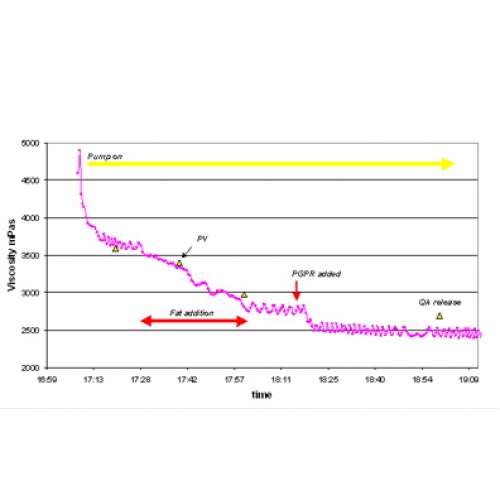
Improved Process Control and Product Quality in Chocolate Manufacturing
Traditionally, chocolate manufacturers have measured viscosity offline, which hampers fine control of the production process. Critically, this approach doesn’t provide real-time data on tempered chocolate, which is influenced by processing temperature and fat crystal formation…
|
|---|