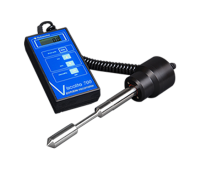
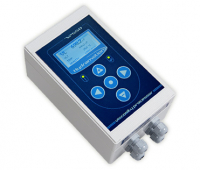
Viscosity sensors for the pulp and paper industry
Hydramotion viscometers are used extensively across all stages of pulp and paper processing.Starch is a fine coating for paper, card and tissue, and in corrugated card where it is also used a to glue the layers together. The amount of starch has an impact on paper strength, printability and other qualities and can be measured and controlled in real time by our inline viscometers since solids concentration, or the length of the starch molecules, is directly related to viscosity.
Furthermore, our viscometers provide excellent control of paper whitening chemicals and coatings, including titanium dioxide and calcium carbonate. Here, viscometry is used to as an indicator of solids content and particle size.
All instruments are factory-ready, with any type of process fitting and a range of outputs for direct reading of viscosity and temperature for complete 24/7 ‘lights-out’ process control with virtually no maintenance.
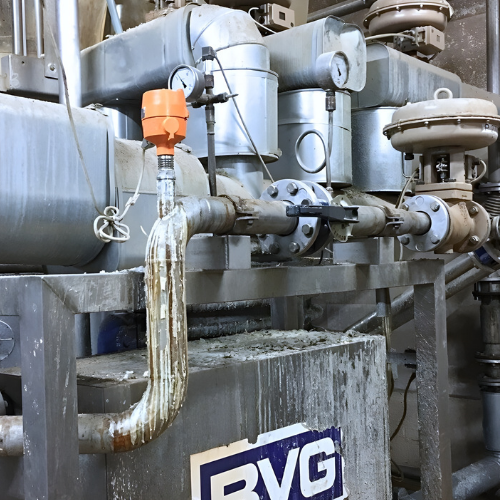 Robust constructionAll wetted parts are manufactured from corrosion-resistant stainless steel suitable for chemically treated pulps, bleaching agents and coating formulations. The solid, all-welded sensor design withstands abrasive fibres and fillers without fragile components or clogging passages. |
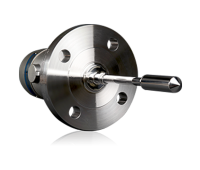
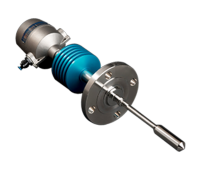
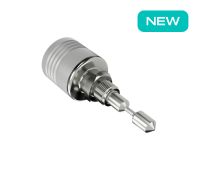
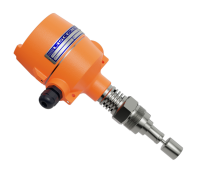
 Process connectionsFor straightforward integration, Hydramotion viscometers are available with a wide range of industrial process fittings to match existing pipework and circulation systems. Flanged, threaded and custom mounting options are available for stock lines, coating loops, starch kitchens and chemical preparation systems. |
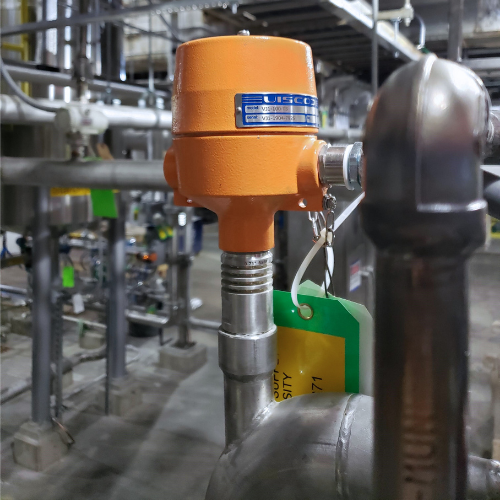 Continuous operationPulp and paper production runs continuously with minimal downtime. All viscometers are designed for permanent inline installation and tolerate routine wash-downs, temperature cycling and process cleaning without removal from the system, maintaining reliable measurement throughout long production campaigns. |